

Advertisements
Credit card linked to Pix It has gone from being just a fintech novelty to becoming a fairly accurate reflection of new Brazilian financial behavior.
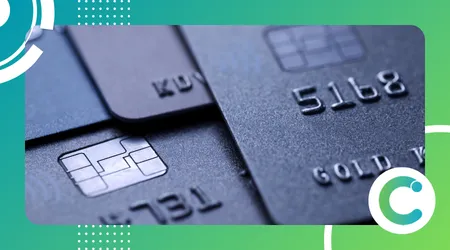
The change happened quickly, almost silently. First came Pix. Then, the need to integrate speed with credit.
The result was a hybrid system that is beginning to change not only payments, but the very perception of consumption.
The most curious thing is that many people still treat Pix and credit cards as separate tools.
In practice, this border has already begun to disappear.
Banking apps figured it out before the average consumer.
Those who can combine instant payment with credit limits create a more seamless experience — and seamless experiences tend to win.
Not always because they are better. Sometimes simply because they require less mental effort.
Continue reading the text!
What changes when Pix meets credit?
On the surface, the operation seems simple.
The person makes a Pix payment as usual, but the amount is deducted from the card's credit limit instead of the available balance in the account.
But the real transformation isn't in the technology. It's in the logic of consumption.
For decades, the credit card has carried a specific meaning: flexibility, installment payments, the ability to anticipate purchases.
Bank transfers, on the other hand, belonged to a different world altogether—more bureaucratic, less emotional.
Pix disrupted that balance.
Suddenly, transferring money became instantaneous, almost invisible.
And now the credit card linked to Pix It combines these two sensations: absolute speed and increased purchasing power.
There's an interesting historical detail here.
The Brazilian banking system has always operated with a certain degree of operational complexity. TED (Electronic Transfer of Funds), DOC (Document of Credit), clearings, banking hours.
Pix eliminated some of that slowness in just a few months.
Integrated credit emerges almost as an inevitable consequence of this cultural shift.
Read also: The impact of digital microsignatures on the monthly budget.
Why is this model growing so rapidly?
The expansion doesn't happen simply because the technology works well. It grows because it directly engages with modern consumer habits.
People have become accustomed to instant gratification. Waiting is no longer neutral; it has become a source of frustration.
According to data from the Central Bank, Pix already accounts for billions of monthly transactions in Brazil, surpassing several traditional payment methods.
This creates a perfect environment for hybrid financial solutions.
THE credit card linked to Pix It gains traction because it offers something psychologically powerful: the feeling of resolving any payment immediately, even without available funds.
There's something subtly unsettling about that.
The shorter the gap between desire and payment, the less room there tends to be for financial hesitation.
Consumption becomes less emotionally demanding — and that's precisely where part of the risk lies.
This is often misinterpreted as simply modernizing the banking sector.
But there is a profound behavioral component to this transformation.
++ The rise of digital accounts integrated into financial apps.
How has Brazilian financial behavior changed?
Few people realize how much Pix has changed daily habits in a short time.
Before it, there was almost a small ritual involved in the act of paying. Inserting the card, waiting for authorization, dealing with banking time restrictions. Even the slowness created a certain awareness of the expense.
Pix dismantled that ritual.
Today, payments happen in seconds. And the human brain adapts quickly to convenience.
Once the speed becomes standard, any friction seems outdated.
THE credit card linked to Pix It emerges precisely within this logic of accelerated consumption.
And there is something symbolic in all of this.
Digital money is starting to lose its "emotional weight".
It doesn't disappear, of course. But it becomes more abstract. More silent. As if the act of spending has been softened by the interfaces of the apps.
An analogy helps to visualize it.
This system works like escalators in airports: it makes the journey more comfortable, almost automatic.
The problem is that sometimes people travel greater distances without realizing the effort involved.
++ How the silver economy in Brazil grows and changes consumption.
Real advantages beyond practicality.
The main advantage is evident right from the first use: flexibility.
The user can make instant payments even during periods of low liquidity.
Medical emergencies, urgent purchases, or unexpected payments no longer depend solely on the account balance.
But the impact goes beyond that.
Many small businesses have started to prefer Pix due to the immediate payment options and lower fees.
In this scenario, the credit card linked to Pix It creates an interesting bridge between consumer and merchant.
Another important point involves financial centralization.
People tend to adopt systems that simplify decision-making more quickly.
The fewer steps there are in the payment process, the greater the feeling of efficiency tends to be.
And that's precisely why banks and fintechs are competing so intensely in this market.
According to analyses by Febraban, integrated solutions between credit and instant payments are expected to gain even more ground in the coming years.
The less discussed risks of this system
Convenience comes at an invisible price.
THE credit card linked to Pix It reduces emotional barriers to consumption.
And, however irritating they may seem, some barriers help with financial self-control.
When payment becomes instant and almost imperceptible, the concrete feeling of spending diminishes.
This has happened before.
Physical money created an immediate perception of loss.
The card softened that feeling. Now, Pix integrated with credit takes that abstraction a little further.
There is also the risk of interest rates.
Depending on the financial institution, payment plans and fees can turn a practical solution into debt that is difficult to manage.
The problem is that many people still use these tools without fully understanding the costs involved.
And perhaps this is the most delicate aspect of this transformation: technological speed tends to advance faster than financial education.
Everyday examples that explain growth.
Some scenarios help to explain why the model spreads so quickly.
Emergency outside banking hours
Imagine someone needing to pay for veterinary care in the middle of the night.
The clinic only accepts Pix. The available balance in the account does not cover the expense at that moment, but there is credit available on the card.
In this case, the credit card linked to Pix It solves an immediate problem without the need for a traditional loan or additional bureaucracy.
It seems like an operational detail. It's not.
This type of convenience completely alters people's emotional relationship with financial services.
Small entrepreneur taking advantage of opportunity
Now imagine a micro-entrepreneur finding a supplier with a flash discount for immediate payment.
Waiting for bank clearance could mean losing profit margin. With Pix on credit, the transaction happens instantly.
Financial speed is starting to become a competitive advantage.
And this shows how the system doesn't just impact individual consumers.
Small businesses are also beginning to reorganize financial decisions around this agility.
Comparison between traditional Pix and Pix for credit.
| Aspect | Traditional Pix | Pix on Credit |
|---|---|---|
| Origin of value | Account balance | Card limit |
| Installment | No | Yes, in some cases. |
| Speed | Instant | Instant |
| Feeling of control | Bigger | Minor |
| Financial flexibility | Limited to the balance | Wider |
| Risk of indebtedness | Low | Moderate or high |
The comparison reveals something important.
THE credit card linked to Pix It increases financial freedom, but also demands greater maturity from the user.
Convenience and risk often grow together.
How do banks and fintechs compete in this market?
The dispute isn't just about technology. It's about everyday presence.
Those who control day-to-day payments tend to strengthen long-term financial relationships. Traditional banks realized this. Fintechs understood it even faster.
THE credit card linked to Pix It has become a strategic piece because it combines two extremely lucrative areas: credit and instant payments.
There is also a symbolic component to this race.
Financial applications are trying to visually disappear. The less the user "notices" the operation, the greater the feeling of fluidity tends to be.
To keep up with this transformation, analyses from Valor Econômico and content from InfoMoney help to understand how the Brazilian financial market is redesigning its digital services.
Frequently Asked Questions
| Question | Response |
|---|---|
| Does Pix charge interest on credit card payments? | It depends on the bank and the terms offered for installment payments or use of the credit limit. |
| Is it safe to use this system? | Yes, provided that basic digital security and bank authentication measures are maintained. |
| Is the credit card limit being used up normally? | Yes. The transaction amount is usually deducted directly from the available credit limit. |
| Is it a better deal than a traditional credit card? | It depends on the financial profile and the need for immediate flexibility. |
| Should this model grow even further? | Everything indicates that this is the case, mainly due to Pix's already established popularity in Brazil. |
There is something quite revealing about this transformation.
Pix was created as a technical tool for fast transfers. It was almost bureaucratic in its initial proposal.
Gradually, it began to occupy emotional spaces that previously belonged exclusively to the credit card: autonomy, convenience, and a feeling of constant liquidity.
THE credit card linked to Pix It's not just changing payments.
++ Is it possible to make Pix payments with a credit card? Find out here.
It's changing the way people feel about money itself.
