

Advertisements
Integrated digital accounts represent one of the most transformative advancements in the current Brazilian financial sector.
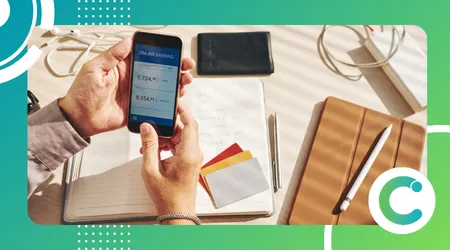
They go beyond a simple account in an app: they connect balances, data, and services from different institutions into a truly seamless experience.
This integration is changing, quietly but profoundly, how we handle money in our daily lives.
Instead of jumping between apps, we gain a more coherent view and tools that truly help with decision-making.
👉Keep reading!
Summary
- What are they and why are they advancing so rapidly?
- How they work in financial apps
- What are the main advantages?
- Real-world examples in action
- Challenges and what lies ahead
- Frequently Asked Questions
What are they and why are they advancing so rapidly?
Integrated digital accounts are born from the combination of digital banks, fintechs, and the Central Bank's Open Finance initiative.
They allow different platforms to communicate with each other, with the user's clear consent, creating an environment where information and action are more closely linked.
Unlike traditional accounts, which are isolated by design, these solutions use secure APIs to share what really matters.
The result is practical: you see consolidated expenses, make payments without having to manually transfer funds, and receive suggestions based on a more complete picture of your financial life.
What drives this progress is not technological fad, but a long-standing frustration.
Who hasn't felt overwhelmed trying to figure out where their money really is?
When life moves at a fast pace, switching between apps becomes an invisible cost of time and attention.
Integrations address exactly this point, without pretending they can solve everything on their own.
Read also: How the silver economy in Brazil grows and changes consumption.
How do they work in financial apps?
The heart of the system is explicit consent.
You authorize, for a limited time, an app to access balances, statements, or the ability to initiate transactions at another institution.
Everything is done via standardized APIs, with layers of encryption and strict controls.
In practice, the main app can show a unified view, automatically categorize expenses from multiple sources, or even schedule Pix payments using funds from another account.
It's not magic, but an infrastructure that has matured rapidly in Brazil.
There's something interesting about this: Open Finance has somewhat reversed the old logic of banks.
Previously, each institution guarded its data like a fortress.
Now, with the customer's permission, competition also takes place in the quality of the integrated experience. This forces everyone to improve.
++ Sovereign Brazil credit: who can apply for the new loans
What are the main advantages?
The first thing that immediately stands out is the realistic view of the finances.
No more mentally adding up balances or opening three apps to be sure of what's left.
Charts, alerts, and smart categorizations help prevent pitfalls before they appear.
Another less discussed advantage is the impact on credit and investments.
With a more complete history — always with your approval — institutions are able to assess risk more fairly.
This often translates into better rates or limits, because the customer is no longer a black box.
Have you ever stopped to think about how much time and mental energy you spend just trying to organize what is already yours?
Integrated digital accounts return some of that energy, transforming scattered data into something closer to a silent advisor.
++ Productive microcredit: when it helps create extra income.
Real-world examples in action
A freelancer I use as a reference manages everything through PicPay as a hub. He connects his salary account at a large bank with his client payment accounts.
The app automatically suggests how much to set aside from income options and allows you to pay suppliers using any available balance, without those tedious manual transfers every week.
The gain is not just in time, but in mental clarity.
Another case that I observe with interest is that of families reorganizing their collective finances.
Parents integrate accounts from different banks and set shared goals, while adult children participate in the overall view with controlled levels of privacy.
It's not about excessive control, but rather a negotiated transparency that helps during times of greater planning, such as trips or renovations.
A useful analogy
Think of them as a kitchen where the refrigerator, pantry, and stove finally "talk" to each other. You no longer need to run between rooms to see what's available.
The ingredients still come from different suppliers, but the daily preparation becomes much more efficient and creative.
Relevant statistics
Data from Febraban shows that 821% of banking transactions in Brazil already take place through digital channels, with the adoption of aggregators and integrations growing consistently among institutions.
This number doesn't lie: what was once a differentiating factor has become an expectation for a large part of the public.
Challenges and what lies ahead
Not everything is rosy. Security and privacy issues remain relevant, even with the safeguards of Open Finance.
Users need to get into the habit of reviewing permissions — something that many still treat carelessly.
There is also an uneven learning curve.
Not all apps deliver the same depth of integration, and the experience can frustrate those who expect complete simplicity from day one.
Looking ahead, the trend points towards greater use of artificial intelligence in forecasting and possibly more native integration with the digital realm (DREX).
What seems certain is that integrated digital accounts are here to stay, pushing the market towards a more competitive place focused on people's real needs.
Frequently Asked Questions
| Question | Response |
|---|---|
| Is it safe to share data between banks? | Yes, when done via Open Finance with explicit consent. The data is transmitted encrypted and access can be revoked at any time. |
| Do I need to transfer all the money to a single account? | No. The integration allows you to use balances from connected accounts without mandatory transfer in most cases. |
| Which apps offer good integration today? | PicPay, Nubank, Inter, and other major players have already made significant progress in this area. |
| Is it possible to connect accounts from traditional banks? | Yes, provided the institution participates in Open Finance. |
| Is there an extra cost? | Basic file sharing is usually free; more advanced services may have paid options. |
Integrated digital accounts are gradually redefining our relationship with money.
They don't replace discipline or conscious planning, but they provide sharper tools for those who decide to take control of their own financial lives.
If you're still navigating between disconnected apps, perhaps it's worth trying a simple integration. The future is already here — and it looks much more connected.
Read also:
