

Advertisements
Digital microsignatures They rarely scare people away at the time of hiring.
A productivity app for R$ 12.90, a streaming platform for R$ 19.90, cloud storage for a few more dollars.
Everything seems too small to cause immediate concern.
The problem starts later.
The charges accumulate silently, almost like financial background noise.
Before the user knows it, a significant portion of their monthly income is already committed to services that, often, they no longer use frequently.
There is something curious — and a little unsettling — about this consumption model.
It transforms continuous spending into a feeling of comfort. The money goes out without producing the emotional impact that a large purchase used to cause.
While broader economic discussions gain traction, such as the measures announced in the BNDES's Sovereign Brazil Plan 2026 to address international instability, another instability is occurring within personal finances—more discreet, fragmented, and on a daily basis.
Keep reading the text!
What are digital microsignatures?
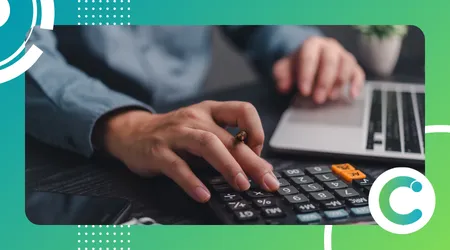
To the digital microsignatures These are low-value recurring payments associated with online platforms, apps, artificial intelligence, streaming, storage, and digital tools.
Taken separately, they almost never appear to pose a financial threat.
That's precisely the point.
The model works because small charges generate little psychological resistance.
A subscription to R$ for 9.90 hardly provokes the same reflection as a purchase of R$ for 300, even if the accumulated spending over the year easily exceeds that amount.
There is also an important cultural shift behind this.
For decades, people bought products. Now, they buy continuous access.
Ownership was gradually replaced by automatic monthly payments — and many people didn't even realize exactly when this happened.
To the digital microsignatures They thrive because they blend into the routine. They become invisible.
Read also: The rise of digital accounts integrated into financial apps.
Why do small charges seem so harmless?
The human brain tends to react more strongly to large, immediate losses than to small, constant outflows of money.
Technology companies understand this perfectly.
By dividing services into small, recurring payments, they create a feeling of financial lightness. It doesn't seem like a serious expense. It just seems like "another app".
But accumulation changes everything.
Streaming, music, professional platforms, generative AI, extra storage, fitness apps, book clubs, premium subscriptions.
The credit card becomes a kind of silent corridor where small charges go unnoticed.
According to a survey published by CNBC, many consumers drastically underestimate how much they spend monthly on digital subscriptions.
In many cases, the true value far exceeds the initial perception.
There's a detail that's often misunderstood: the problem is rarely in a single signature. It's in the scattered sum.
++ How the silver economy in Brazil grows and changes consumption.
How do they alter the budget without drawing attention?
To the digital microsignatures They slowly erode the budget. And perhaps that's the most dangerous aspect.
Large expenses generate an immediate reaction. Small recurring charges create complacency.
It's rare for someone to review all the contracted services frequently. Many remain active simply out of inertia.
Others continue to be paid because canceling requires too many steps — and the platforms know this perfectly well.
There's almost an engineering of forgetting in this model.
The user signs up quickly, uses the service intensively for a few weeks, and then abandons it without stopping the billing.
The debt continues to accumulate in the depths of one's financial life, like a dripping faucet in a quiet house.
An analogy helps to visualize it.
To the digital microsignatures They work like sand slowly entering a backpack.
At first, nobody notices a difference. After a while, the weight changes the entire journey.
++ Sovereign Brazil credit: who can apply for the new loans
Which sectors are most dependent on this model?
Streaming paved the way, but the logic of recurring revenue has spread far beyond entertainment.
Today, professional software, productivity applications, educational platforms, artificial intelligence, cloud storage, and even simple tools operate on a subscription basis.
Edit images, remove ads, access extra features, automate tasks. Almost everything can become a monthly charge.
There is a very clear economic reason for this.
Recurring revenue offers financial predictability for businesses and investors.
It's more stable. More secure. That explains why so many platforms have migrated so quickly to this model in recent years.
Reports from McKinsey & Company show that subscription-based businesses continue to grow precisely because of the ongoing retention of users.
What's interesting is to see how consumption has gone from being episodic to being permanent.
Real-world examples of financial impact
Some situations make this dynamic more evident.
Example 1: The remote professional surrounded by tools.
A freelance designer subscribes to editing platforms, cloud storage, artificial intelligence, organizational applications, and image banks.
No single monthly fee seems absurd in isolation.
However, upon reviewing expenses, he realizes that a significant portion of his monthly income was disappearing on rarely used items.
Some had been active for months without any real use.
The impact didn't happen all at once. It crept in slowly, almost imperceptibly.
Example 2: Fragmented entertainment
Another common example involves streaming.
A family subscribes to movie, TV series, music, sports, games, and shared storage services. Small amounts are paid out throughout the month.
When added together, they exceed essential household expenses.
There's an irony in all of this.
Technology promised convenience and cost savings. In many cases, it created a continuous billing model that is more burdensome than older formats.
To the digital microsignatures They are strengthened precisely because they are almost never analyzed together.
Differences between traditional consumption and recurring subscriptions.
| Aspect | Traditional Purchase | Digital Microsignatures |
|---|---|---|
| Payment method | Unique | Appellant |
| Feeling of spending | Strong and immediate | Diluted |
| Financial control | More visible | More scattered |
| Relationship with consumption | One-off | Permanent |
| Cancellation | Not applicable | Not always simple |
| Cumulative impact | Snapshot | Progressive |
The change seems technical, but it's not just that.
It changes the way people perceive money. And perhaps that's the quietest transformation of all.
How can we reduce hidden financial waste?
Control digital microsignatures It doesn't mean abandoning technology or living in constant restriction.
The central issue is visibility.
Many people only understand the magnitude of the problem when they carefully review their credit card bill or bank statement.
The shock usually comes quickly: forgotten services, duplicate charges, platforms that are almost never used.
There is a common pattern of behavior there.
People tend to carefully analyze large expenses, but ignore small, automatic outings. However, budgeting doesn't emotionally distinguish the size of waste.
Money lost is still money lost.
NerdWallet's financial education tools help precisely in this process of consciously reviewing recurring subscriptions.
Sometimes, canceling two or three rarely used services can be more effective than making far more uncomfortable cuts in other areas of life.
Frequently Asked Questions
| Question | Response |
|---|---|
| Do digital microsignatures really affect the budget? | Yes. The cumulative effect can become quite significant over the course of the year. |
| Is it worth cancelling all subscriptions? | No. Some do generate real value. The important thing is to assess frequency of use and practical need. |
| Why do these charges go unnoticed? | Because the individual amounts seem small and the renewal happens automatically. |
| Is there a risk of indebtedness? | Yes, especially when multiple subscriptions accumulate without clear financial control. |
| How to identify forgotten services? | Regularly reviewing bank statements and recurring credit card charges. |
There is something symbolic in the advancement of this consumption model.
The money is no longer visibly taken out of the wallet.
It disappears in small, automatic fragments, silent enough not to generate an immediate reaction.
To the digital microsignatures They don't seem dangerous because they were designed precisely for that purpose.
And perhaps it is precisely this discretion that makes them so impactful on the monthly budget.
++ Digital subscriptions: the invisible consumption that drains your income at the end of the month.
++ Digital subscriptions are increasingly impacting the budget.
