

Advertisements
The silver economy in Brazil It is ceasing to be a demographic curiosity and is now establishing itself as one of the most disruptive forces in national consumption.
While many still imagine aging as synonymous with decline, reality shows something quite different: a mature audience with purchasing power, time, and high expectations, which is forcing companies to rethink almost everything.
Continue reading the text!
Summary
- What is the silver economy and why does it matter so much now?
- How does population aging drive this growth?
- What changes in consumption are mature Brazilians promoting?
- In which sectors is she transforming the market?
- What challenges and opportunities arise for companies and entrepreneurs?
- Frequently Asked Questions about the topic
What is the silver economy and why does it matter so much now?
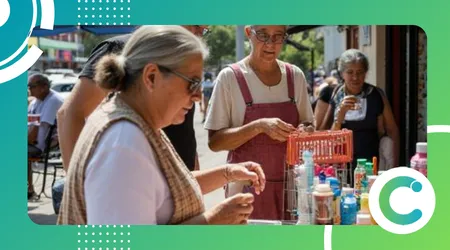
THE silver economy in Brazil It encompasses all economic activities linked to the population aged 50 or older, both in consumption and in production itself.
It goes far beyond medication and adult diapers. It includes adapted housing, meaningful travel, technology that respects limitations, finances for longevity, and even senior entrepreneurship.
What makes this urgent is the aging rate of the Brazilian population.
The country did not have decades to prepare as Europe or Japan did.
Here the transition is rapid and, in some respects, silent. By 2025, the number of people over 60 will exceed 35 million.
Looking ahead, projections indicate that by 2070 they will represent almost 38% of the population.
Those who ignore this segment are not only losing market share—they are betting against the country's demographic future.
There's something unsettling about this story. For decades, Brazilian marketing has obsessively targeted young people.
Now, the center of the age pyramid is shifting, and many brands still seem surprised by the change.
Read also: Sovereign Brazil credit: who can apply for the new loans
How does population aging drive this growth?
Life expectancy at birth already exceeds 76 years, and those who reach 60 still have, on average, more than 22 years ahead of them.
At the same time, the birth rate is plummeting.
This imbalance creates an ever-growing base of mature consumers with relatively stable incomes.
In 2024, consumption by people aged 50 and over already represented approximately R$ 1.8 trillion — 24% of total private consumption.
The trend is clear: this value should double in two decades, reaching close to R$ 3.8 trillion.
It's not a niche. It's a wave that will reshape economic priorities.
Perhaps the most revealing statistic is another: the number of entrepreneurs aged 60 or older jumped 58.61% in the last decade, reaching 4.5 million.
Silver isn't just spending. It's creating, innovating, and often solving problems that younger generations haven't even realized yet.
++ Productive microcredit: when it helps create extra income.
What changes in consumption are mature Brazilians promoting?
They buy differently. They value practicality without sacrificing quality, seek security without paranoia, and desire experiences that have meaning.
This affects everything: from font size on packaging to the logic of apps.
Imagine a couple in their 60s choosing a trip. They no longer want to pack for a ride in cramped conditions.
They prefer itineraries with comfort, real accessibility, and some learning along the way.
Or imagine someone renovating their apartment: discreet grab bars, smart lighting, and a bathroom that won't turn into a death trap.
These individual decisions, multiplied by millions, alter entire production chains.
Does the market truly understand that a 65-year-old consumer can be more demanding—and more profitable—than many younger profiles?
THE silver economy in Brazil He is demanding honest answers to this question.
++ How generative AI in business is redefining decisions in 2026.
In which sectors is she transforming the market?
Health and well-being are at the forefront.
This group already accounts for approximately 351% of consumption in this area, with strong demand for prevention, telemedicine, and solutions that maintain autonomy.
A startup from São Paulo, for example, created an app that resembles medication, connects you directly with a doctor via video, and delivers medicine to your home.
The distinguishing feature is the voice interface, large font, and a "peace button" that alerts family members if something deviates from the norm.
Growth reached 180% in two years focusing exclusively on this audience.
In tourism, another interesting trend is emerging.
An agency in the South has put together intergenerational packages where grandparents and grandchildren travel together, with their own activities and shared experiences.
The result goes beyond revenue: entire families consume more and come back. It's consumption that strengthens bonds.
It can be said that the silver economy in Brazil It functions like a mighty river that once flowed discreetly between narrow banks and now overflows, irrigating previously neglected sectors: adapted housing, continuing education, safe mobility, and platforms to combat isolation.
What challenges and opportunities arise for companies and entrepreneurs?
Many companies still design products with the younger demographic in mind.
Impossible-to-open packaging, tiny print, and complicated interfaces become real barriers.
Those who persist down this path will feel the loss of relevance sooner than they imagine.
Opportunities arise precisely for those who are willing to redesign their entire journeys.
It's not just about technical accessibility, but about genuine respect.
Communication free from stereotypes, real-world research with the target audience, and team training make a real difference.
Regional inequalities complicate the picture — the Southeast and South concentrate more silver income — but they also open up space for creative solutions and smarter policies.
| Year | Consumption 50+ (R$ trillions) | % of private consumption | Key sectors on the rise |
|---|---|---|---|
| 2024 | 1,8 | 24% | Health, housing, leisure |
| 2034 | ~2,7 | ~29% | Assistive technology, adapted tourism |
| 2044 | 3,8 | 35% | Holistic well-being, longevity finances |
| Sector | Central opportunity | Most urgent adaptation |
|---|---|---|
| Health | Prevention and remote monitoring | Simple interfaces and familiar integration. |
| Tourism | Meaningful and comfortable travel | Truly accessible infrastructure |
| Technology | Solutions that respect limitations. | Real training and inclusive design |
| Housing | Functional and dignified adaptation | Universal designs from the conception stage. |
Frequently Asked Questions
| Question | Direct answer |
|---|---|
| What exactly does "silver economy" mean? | Consumption, services, and production geared towards the mature population with a focus on active longevity. |
| Who is part of this audience? | Primarily from the age of 50 onwards, with the most active group between 60 and 75. |
| Is it a market only for the upper classes? | No. There are demands across all sectors, especially essential services. |
| How can companies prepare? | To truly engage with the audience, test usability, and revise communications. |
| What is the impact on physical retail? | Stores need easy circulation, seating, adequate lighting, and patient customer service. |
THE silver economy in Brazil It's not a passing fad.
It reveals how we are aging as a society and forces a more honest reflection on what we truly value.
Brands and entrepreneurs who understand this deeply will not only survive the demographic transition—they will help shape a more mature country in every sense.
Relevant links for further reading:
