
Advertisements
Make extra money by selling underutilized space or items. It's no longer that feeling of despair that arises when the bill is piling up.
By 2026, many people will have already incorporated this into their routine as if it were a second checking account: they look around their house, see what's sitting idle, and turn it into monthly income without needing to become an influencer or rideshare driver.
The real problem isn't the lack of things to sell.
It's the laziness of not admitting that we're paying property tax, condo fees, and electricity bills per square meter and for objects that haven't touched our skin in years.
When the first deposit falls, the brain recalibrates: that wasn't junk, it was idle assets.
Advertisements
Continue reading the text!
Why has this become a habit instead of a plan B?
For many people, the numbers just don't add up anymore. Salaries go up 4 %, inflation eats up 6 %, and electricity costs go up 12 %.
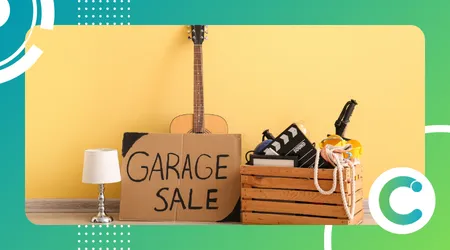
Instead of just cutting Netflix, people started looking inward: the guest room that became a storage room, the garage that accumulates boxes, the camera lens that traveled once and is now hibernating.
Sebrae estimates that the secondhand and thrift store market in Brazil already reaches R$24 billion annually — a growth of more than 30% in just a few years.
It's not just pretty circular economy on Instagram.
It's a stark necessity: record-high household debt, high interest rates, and the realization that idle assets are money the bank will never lend you.
There's something revealing about this. In the past, selling used items was shameful; today, those who don't sell seem to be wasting their money.
The social norm has changed: accumulating wealth has become a sin, circulating it has become financial intelligence.
Read also: How the creator economy creates new business models.
How can you make use of unused space without turning it into a hotel?
Start with the obvious that nobody sees: a parking space. In Sorocaba or any medium-to-large city, an extra parking space for a motorcycle or car yields R$ 180–350 per month with zero renovations.
Advertise on OLX, neighborhood groups, or specific parking apps. Add an extra padlock, take clean photos, and write clear rules. Done.
Have a spare room?
Airbnb is still king for daily rentals (R$ 120–250 per night depending on location), but short-term monthly rentals for interns or university students tend to be more relaxed — less changing of sheets, more predictability.
Many hosts start with weekend daily rates and then move to monthly rates when they find a regular tenant.
The key to success lies in low maintenance and quick response times. Those who take 48 hours to reply to a message lose the customer.
Clean workspace + quick communication = repeat business and referrals. After three months, you'll already be paying your entire electricity bill with money to spare.
++ Late credit card bill: real impact
Which items really generate quick cash?
Cell phones from two generations ago are still worth their weight in gold: iPhone 11 or Galaxy S20 in good condition go for R$1,500–R$800 on Mercado Livre.
Noise-canceling headphones you replaced but kept? R$ 300–700 easy. Branded clothing with tags or almost unused flies off Enjoei — bags, sneakers, jackets.
Tools that were used twice (drill, circular saw), unused gym equipment, even expensive board games that nobody plays anymore.
The cruel rule: the more specific and niche you are, the less competition and the better the price.
++ How adaptive financial planning gains traction in 2026
A 50mm f/1.8 lens that you used at two events may be worth more today than when you bought it new.
A recent survey by OLX indicated that those who sell seven or more used items per year typically earn over R$$ 3,000 extra. Those who sell between four and six items earn close to R$$ 1,000.
It doesn't solve all your problems, but it pays off a lot of overdue bills.
What's actually left in your pocket after all this?
You start with almost zero cost — using what you already have at home.
Platforms charge a commission (Mercado Livre 10–16 %, Enjoei progressive, OLX free in many cases, Airbnb 3–5 %), but you still end up with much more than if you stayed still.
Time is the real hidden cost. Taking a decent photo, answering annoying questions, packing carefully, going to the post office.
Those who do things right gain momentum and it becomes automatic. Those who do them poorly become frustrated and give up.
For many people, the psychological gain outweighs the financial one.
Seeing R$ 400 trucks entering a garage that previously only collected dust every month changes one's relationship with their own home.
Suddenly you see everything with eyes full of opportunity.
Have you ever stopped to think about why we continue to pay dearly to store things we don't use, while the internet bill arrives religiously?
This question motivates more people to take action than any financial guru.
It's like having an exercise bike that's become a clothes rack: it takes up space, weighs on your conscience, and indirectly costs energy.
When sold or rented, it becomes R$ 600–900 that buys the market for the week. Dead weight becomes an ally.
Two stories that show the cat's leap.
Mariana, a teacher in Sorocaba, had a garage full of junk belonging to her former tenant.
He cleaned, took photos, and advertised a job opening for a motorcycle delivery driver for R$180/month. Within two weeks, he closed a deal with an app delivery driver.
Then a second private motorcycle courier came along. Today it's R$ 360 fixed monthly — it covers health insurance and there's change left over.
He never needed to renovate anything, just communicate properly with the guys and keep the space clean.
Pedro, a freelance designer, had a 50mm lens that he used at two weddings and then stored away. He advertised it for R$ 1,200 (he bought it new for R$ 2,800).
He sold it in ten days. With the money, he paid for a motion graphics course and closed two big deals the following month.
The stagnant item became leverage for business growth. It wasn't a one-off sale; it was disguised reinvestment.
Cases like this are not the exception. They are the norm when a person treats something as a business deal, not as a favor.
Questions that everyone asks
| A question that won't leave my head. | Raw response |
|---|---|
| Do I have to declare everything on my income tax return? | If capital gains or recurring rental income exceed approximately R$35,000/year, it becomes taxable income. One-off sales have partial exemption. High amounts require an accountant. |
| Does the platform consume a lot of food? | It depends: OLX almost nothing, Mercado Livre 10–16 %, Airbnb 3–5 % + guest fee, Enjoei progressive. Always disappears before posting. |
| Is it safe to rent to a stranger? | Use platform identity verification, mutual reviews, a security deposit, or a simple contract. Start with daytime hours. Airbnb insurance helps a lot. |
| How long does it take for the money to come in? | Item sales: 1–4 weeks. Monthly rentals: 30 days. Daily rentals: immediate. Consistency speeds everything up. |
| Does it work in a medium-sized city like Sorocaba? | It works even better. Local demand for motorcycle/car parking, student rooms, and used items is high. Neighborhood WhatsApp groups sell more than incognito ads. |
What remains after the first deposit?
Make extra money by selling underutilized space or items. It won't make you rich.
But it takes away the burden of "I don't know where to get the money from." It's real control over finances using what already exists—without needing credit, without becoming a slave to a schedule.
Many people discover that owning a home has more potential than they imagined.
A room, a garage, a forgotten box: every piece can become an ally. The hard part isn't selling. It's starting.
For those who want to dig deeper:
- OLX 2025 Research – Selling Used Items as Extra Income
- Sebrae – Second-hand market and thrift stores in Brazil
- Airbnb Brazil – Host Data and Economic Impact 2025/2026
The first announcement is the hardest. After that, it becomes a habit.
And habit, when done well, turns into financial freedom disguised as weekend cleaning.
