
Advertisements
The economy of creators It is redefining how value is created, distributed, and monetized in the business world.
Instead of relying solely on large corporations or traditional intermediaries, ordinary individuals are transforming ideas, stories, and skills into direct sources of income.
This is not a passing trend: it's a structural change that opens doors to more agile, personalized models that are closer to the audience.
With the rapid growth of digital platforms, anyone with a cell phone and a good story can build their own business.
The result? A more democratic economy, where creativity becomes capital.
Continue reading and find out more!
What is the creators' economy?
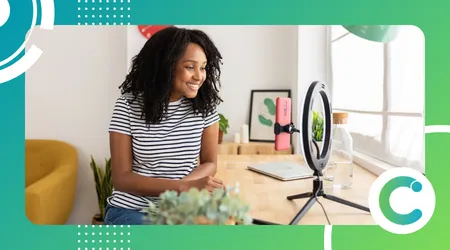
THE creators' economy It emerges when ordinary people begin to monetize content and direct relationships with audiences.
It's not just about posting videos or photos. It's an ecosystem where the creator acts as a producer, brand, seller, and community all at the same time.
Unlike the old media model, where money flowed to publishers or broadcasters, here the creator captures value at the source.
Platforms facilitate this, but the real driving force is authentic connection.
In Brazil, this movement is gaining particular momentum.
With over 3.8 million active influencers in 2025, according to data from the Influencer Marketing Benchmark Report, the country is consolidating itself as a global powerhouse.
Many breeders already make a living exclusively from this activity, which shows how... creators' economy It went from being a hobby to becoming a structured profession.
See also: Late credit card bill: real impact
How to creators' economy Does it transform traditional business models?
Traditional models rely on long supply chains: mass production, mediated distribution, and expensive marketing.
THE creators' economy It shortens all of that. The creator speaks directly to the audience, understands desires in real time, and adjusts the offer on the spot.
Older companies used to spend fortunes on TV campaigns or generic advertisements.
Today, brands prefer partnerships with creators because they generate immediate trust and higher conversion rates.
Control is being shifted away from central agencies and into individual hands.
This transformation forces even giants to adapt.
They create funds for creators, integrate social commerce tools, and measure success by community, not just clicks.
The result is a more fluid market, where value arises from human relationships, not from rigid structures.
++ How adaptive financial planning gains traction in 2026
What new business models are creators' economy Are you creating it?
THE creators' economy It invents formats that blend content with commerce in a natural way.
One of them is the recurring subscription model: instead of relying on volatile ads, creators offer exclusive access to paid communities, courses, or live streams.
Another path is integrated social commerce.
Creators sell their own products directly in videos or live streams, eliminating intermediary inventory and creating vertical supply chains.
Platforms like TikTok Shop accelerate this.
++ How the digital account with automatic Pix is rewriting payments.
Furthermore, the concept of consolidation emerges. Creators build veritable micro-enterprises with teams, their own data, and IP addresses.
Managers became strategic partners, helping to launch products, events, and even community investments.
All of this creates businesses that are more resilient than the old ones.
What are the main advantages for those who join? creators' economy?
Enter the creators' economy It provides financial independence that few traditional jobs offer.
You control your schedule, messages, and revenue without waiting for approval from bosses or agencies.
Closeness with the audience generates real loyalty. Fans pay not only for the content, but for the connection.
This creates high barriers to entry for competitors and predictable revenue over time.
Finally, the low initial cost democratizes access. With a smartphone and consistency, anyone can test ideas quickly.
Mistakes become learning experiences, and successes scale globally. It's a terrain where experimentation trumps perfect planning.
Real-world examples of transformation driven by creators' economy
Think of a fitness content creator who started out posting free workouts on Instagram.
Today, he not only profits from partnerships: he has developed a complete line of supplements and personalized training apps.
The audience buys because they trust the person behind the product.
This vertical flow — content, private label, direct sales — is a new model that few traditional companies can replicate with the same speed.
Another case involves a personal finance podcaster.
She migrated from a free format to a membership platform with exclusive reports, monthly live sessions, and even a community investment club.
THE creators' economy It allowed her to transform listeners into active partners.
Instead of relying on unstable sponsors, she built recurring revenue and a brand that's worth more than any previous contract.
These examples show how the creators' economy It converts attention into lasting assets. It's not luck: it's strategy applied with creativity.
Here's a useful analogy: a creators' economy It recalls the revolution of artisans in the pre-industrial era.
Previously, master craftsmen controlled the entire operation — from raw materials to the final sale.
Then came factories that fragmented everything. Now we're back to the digital artisan, but with global reach and tools that multiply the impact.
Why the creators' economy Does this represent the future of business?
THE creators' economy It grows because it solves long-standing consumer problems: lack of authenticity and distance between brand and customer.
In a world saturated with advertisements, people buy from those they know and respect.
Projections confirm the potential.
The global market of creators' economy It reached US$254.4 billion in 2025 and is expected to reach US$313.95 billion in 2026, with a CAGR of 23.41% until 2035, according to a study by Precedence Research.
This speed surpasses that of many mature sectors.
Companies that ignore this movement risk losing relevance.
Those who participate — whether as creators or partners — gain agility, real behavioral data, and loyal communities.
The future belongs to those who understand that business today is about relationships, not just products.
What if the next big venture isn't born in a boardroom, but during a late-night live stream?
Frequently asked questions about creators' economy
| Question | Response |
|---|---|
| THE creators' economy Does it require a large investment to get started? | No. Most people start with a cell phone and the internet. The real investment is time and consistency; paid tools come later, when the audience is already generating a return. |
| Do subscription models work for all types of content? | Yes, especially when there's unique value. Courses, behind-the-scenes content, or closed communities convert better than generic content. |
| How to measure success in creators' economy? | In addition to followers, focus on engagement, retention rate, and recurring revenue. Community metrics are worth more than isolated views. |
| THE creators' economy Does it replace traditional jobs? | It doesn't replace it, but it complements it. Many creators maintain parallel careers or use the model to diversify their income. |
| Which platforms are best suited for new creators? | Start where your audience is: Instagram and TikTok for discovery, YouTube and Substack for depth and direct monetization. |
To learn more, check out the... A comprehensive study by Precedence Research on the global market., the Overview of the creator economy in Brazil, as published by Valor. and the Forbes article about the consolidation era in 2026.
THE creators' economy It's not just a new way to make money. It's a different way of thinking about value, relationships, and growth.
Those who get in early build a solid foundation for a business that truly belongs to them.
