

Advertisements
Contrary to popular belief, the Brazilian digital real is not a cryptocurrency, but rather the digital version of our Brazilian real. Read the text to learn more.
The expectation for the launch of digital real Brazil was supposed to be in 2022, we've already entered that year and there still hasn't been any update on the matter.
However, we are still at the beginning of the year and a lot of water will still flow under the bridge, especially since the Central Bank's forecast is that it will be launched by 2024.
If you're still in the dark and don't know what this digital currency is, don't worry!
In today's text, you'll have all your questions answered about Brazil's digital currency. Don't miss it!
See below what will be covered in this text:
- What is real digital Brazil?
- How will the digital real work?
- What is the difference between the digital real and cryptocurrencies?
- What are the benefits?
- On the evolution of payments by electronic means.
- Conclusion.
What is Real Digital Brazil?
Real digital Brasil is the Brazilian virtual currency, in fact, it is the digital version of the real that we already know and not a cryptocurrency.
According to Bacen's plans, it should be launched by 2024, but since the announcement of the creation of this currency, there has been great expectation that it will begin operating this year.
Well, we'll just have to wait and see. There are still many mysteries surrounding this currency, and some will only be revealed when it's launched and we start using it.
How will the Brazilian digital real work?
It will have the same value as our real, it is not volatile like cryptocurrencies, that is, its value will not fall or increase in an instant, it will simply follow the value of the real.
The currency issued by the Central Bank will be CBDC (Central Bank Digital Currency). These acronyms refer to digital currencies issued by a given country's central banks.
In fact, some countries are already testing the digital version of their currency, for example, China and Venezuela.
In the case of China, the government's desire is for the country to stop using cash, so it has promoted some actions so that its digital currency have better acceptance among the Chinese.
Currently, there is only one country that officially uses a digital currency, the Sand Dollar, the digital currency of the Bahamas.
THE digital real Once purchased, Brazil cannot be converted into banknotes. The Central Bank of Brazil will generate codes that will indicate the value of each digital currency.
The Central Bank expects the digital currency to be accepted by Brazilians and used frequently in their daily lives.
With the popularization and innovation of electronic payments, the use of paper money has fallen significantly.
In 2020, only 35% of global financial transactions were made with cash, the data comes from the organization The Global Payments Report.
Furthermore, according to the institution, starting in 2019, in four years “cash” will be the least used traditional payment method by consumers around the world.
This just highlights the fact that the digital real Brazil will be well received and used by the population.
What is the difference between the digital real and cryptocurrencies?
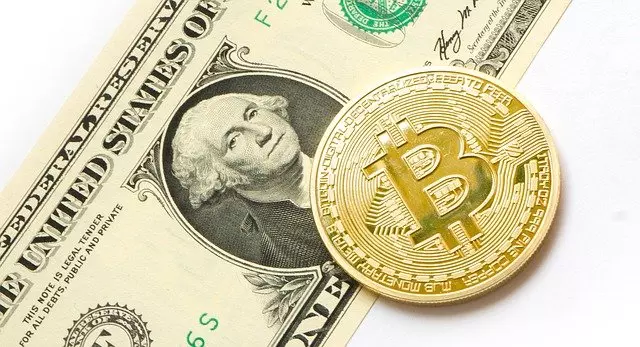
As mentioned above, the digital real is not a cryptocurrency. Cryptocurrencies have investment characteristics.
Furthermore, they are not regulated by the Central Bank or any other public body. They are part of a decentralized system, meaning they are not under the control of any monetary organization.
The digital real, in turn, will be backed by our currency, issued by the Central Bank, and will therefore be controlled by it.
Furthermore, cryptocurrencies are volatile, meaning their value can increase or decrease in a matter of seconds.
What are the benefits of this currency?
One of the main benefits of using the digital real Brazil is the reduction in the production of paper money, that is, a reduction in costs and exploitation of raw materials.
Furthermore, this virtual currency can also inhibit money laundering, facilitate transactions, and encourage innovation and competition in the virtual environment.
On the evolution of payments by electronic means
The evolution of technology has made electronic payment methods popular throughout the world.
In fact, the pandemic fueled this market even more, as it changed the way people paid their bills.
The trend is that changes will continue to occur and traditional payment methods will be used less and less, for example, credit cards and cash.
Personally, I don't use cash much, I move around R$$400.00 in bills per month.
This money is only to pay some local farmers in my city, as they sell produce from their fields and have not yet adopted these payment methods.
Other than that, all other payments are made digitally, and with the arrival of Pix, this situation has gotten even worse.
The last time I went to a bank branch was in 2019, and to be honest, I don't miss it at all. I've followed the evolution of electronic payments with great positivity and enthusiasm.
And yes, I look forward to the release of digital real Brazil to use the physical real even less.
However, I'm sure I'm not the only one who supports electronic and digital payment methods.
- In 2020, the number of non-face-to-face transactions increased by 32%.
- Payment technology grew by around 47% after the pandemic.
- Cash has been in decline since 2019, by 2024 it will be the least used traditional payment method.
- Only 3% of the money available for operations in Brazil is in cash.
- Almost R$1,400,000 trillion are deposited and moved in a virtual environment.
The data is from the BCB and Global Payments Report.
Conclusion
THE digital real Brazil will continue to be our real, but in a digital and alternative version. It can certainly further simplify our lives and the way we make payments.
For now, we just have to wait for its release to start using it and discover its advantages and disadvantages.
Don't worry, as soon as it's launched, we'll test and create relevant content to inform you and show you the benefits of this currency.
Recommended reading: Caixa Tem credit card for self-employed workers.
