
Advertisements
The main factor Driving the Renewable Energy Market in 2026 It's the combination of falling battery storage costs and the explosion in electricity demand from artificial intelligence data centers.
Companies, investors, and governments are accelerating the energy transition to ensure security of supply and financial predictability.
In this article, you will understand the economic, technological, and regulatory factors that define this cycle of global expansion and in Brazil.
- Main economic drivers: Competitive costs and industrial demand.
- The effect of artificial intelligence: Energy consumption of data centers.
- Advances in storage: Network-scale batteries.
- Overview in Brazil: Opening of the free market and infrastructure challenges.
- Comparison of sources: economic and operational performance.
- Frequently asked questions: Essential questions about investments and risks.
Key economic drivers that accelerate the energy transition.
Financial competitiveness has become the central driving force. Driving the Renewable Energy Market in 2026.
Solar and wind power projects have achieved tariff parity in nearly all global markets, surpassing fossil fuels even without direct subsidies.
Institutional funds and large corporations are redirecting capital to clean assets due to their lower exposure to geopolitical volatility.
Unlike natural gas or oil, the operating cost of renewable energy plants remains stable over decades.
Industrial policies also play a decisive role in this progress.
Carbon pricing mechanisms and environmental requirements in global supply chains are putting pressure on exporters to prove the clean origin of the electricity they consume.
The role of long-term corporate contracts (PPAs)
Long-term power purchase agreements (PPAs) have become strategic tools for financial protection.
Energy-intensive industries lock in competitive prices for periods of ten to fifteen years, eliminating surprises in cash flow.
For power generators, these agreements guarantee predictable revenue and facilitate access to financing lines with reduced rates.
++ ICMS: Why can each Brazilian state have different rules and rates?
This alignment unlocks billions of dollars in new ventures every year.
The electricity demand of data centers and artificial intelligence.
The rapid growth of cloud computing and artificial intelligence models has created an unprecedented surge in electricity demand.
Modern data centers operate continuously and require massive volumes of firm, emission-free electricity.
Tech giants have made stringent decarbonization commitments, becoming the largest corporate buyers of clean energy on the planet.
These companies directly finance the construction of new solar, wind, and hybrid power plants.
This movement is altering the electrical planning of several countries.
Read more: The impact of public utility rates on the cost of living.
Instead of waiting for the traditional expansion of utilities, technology companies are forming direct partnerships to enable dedicated generation close to their processing centers.
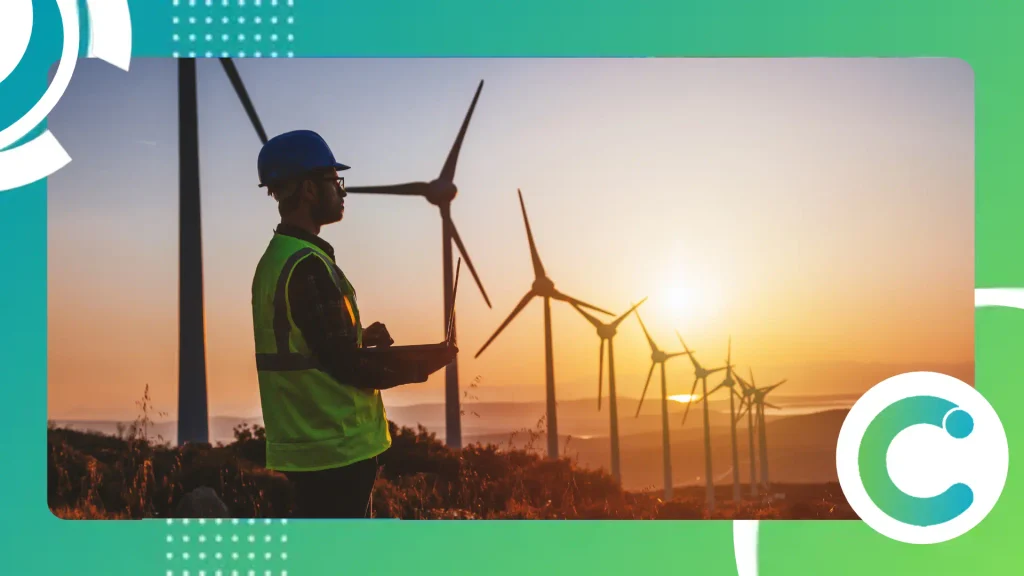
Advances in energy storage and modernization of electrical grids.
Intermittency has always represented the biggest technical bottleneck for solar and wind power sources.
By 2026, the commercial maturity of grid-scale battery storage systems (BESS) will structurally change this dynamic.
The significant drop in prices for lithium-ion and lithium iron phosphate (LFP) cells has made hybrid projects viable.
Power plants now store the surplus energy generated during the day to inject it into the grid during peak nighttime hours.
In addition to batteries, billion-dollar investments in transmission lines and smart grids are unlocking previously stalled projects.
Find out more: How to reduce the cost of living without having to move house or city.
Digitization allows for balancing supply and demand in real time, reducing operational waste.
Combating curtailment and operational efficiency.
The mandatory generation cut, known in the industry as curtailment, This challenges operators in regions with a high concentration of renewable energy plants.
When the grid cannot handle all the electricity produced, generators lose revenue.
The integration of batteries and advanced weather forecasting systems mitigates this problem.
Storage absorbs excess energy during periods of congestion, increasing the real profitability of installed assets.
The Brazilian scenario: free market and distributed generation.
In Brazil, the regulatory environment and the abundance of natural resources continue. Driving the Renewable Energy Market in 2026.
The country maintains one of the cleanest electricity matrices in the world, with a strong focus on hydroelectric, wind, and solar power.
The gradual opening of the Free Contracting Environment (ACL) allows smaller commercial and industrial consumers to choose their suppliers.
This migration broadens the buyer base for independent generators and trading companies.
Meanwhile, distributed generation remains relevant for homes and small businesses seeking an immediate reduction in their monthly electricity bill.
Despite changes in compensation rules, the return on investment remains attractive due to the efficiency of current equipment.
According to data monitored by National Electric Energy Agency (ANEEL), The expansion of Brazil's installed capacity is mainly concentrated in centralized and distributed renewable sources.
Infrastructure and financing challenges in Brazil
Despite its competitive potential, the Brazilian market faces significant bottlenecks that require investors' attention.
The flow of energy generated in the Northeast to the major consumer centers in the Southeast still depends on new transmission auctions.
The cost of capital also influences the pace of projects.
High interest rates make long-term financing more expensive, requiring more sophisticated financial structures, such as incentivized debentures and infrastructure investment funds.
Strategic comparison of renewable energy sources in 2026
Choosing the ideal energy source depends on consumption patterns, geographic location, and the need for a reliable supply.
The following table compares the main economic and operational criteria of the leading technologies in the current market.
| Analysis Criteria | Solar Photovoltaic | Onshore Wind | Hybrid Projects (Solar + Battery) |
| Implementation Cost (CAPEX) | Low to moderate, with a rapid downward curve. | Moderate, sensitive to logistics and equipment costs. | The increase is due to additional investment in storage. |
| Construction Time | Short term (between 6 and 18 months for large plants). | Medium duration (between 18 and 36 months, requiring wind studies). | Medium (12 to 24 months, depending on network connectivity). |
| Generation Predictability | High during the daytime, with a known seasonality. | Moderate to high, especially in the Brazilian Northeast. | Very high, allowing for controlled dispatch during peak hours. |
| Exposure to Curtailment | High levels in saturated regions with no storage. | High levels in areas with restricted transmission. | It goes down because the surplus charges the battery banks. |
| Main Application | Distributed generation, centralized power plants, and self-generation. | Large power generation plants and corporate power purchase agreements (PPAs). | Continuous supply for industries and data centers. |
Use this comparison to evaluate how each technology balances initial cost and operational safety.
While solar leads in speed of deployment, hybrid systems offer the stability required by critical consumers.
Risks and precautions for companies and investors
Although the outlook is positive, hasty decisions could compromise the profitability of energy projects and contracts.
Technical and regulatory analysis has become indispensable before any capital allocation.
Submarket risk: Price differences between regions can lead to unexpected costs in poorly structured contracts.
Connection delays: Denied or delayed access permits postpone the start of operations and reduce financial returns.
Regulatory volatility: Changes in distribution system usage tariffs directly impact the viability of small projects.
Equipment quality: Components without proper certification suffer accelerated degradation, reducing the expected output over their lifespan.
Companies wishing to migrate to the free market must thoroughly audit their load profile. Contracting inadequate energy volumes generates financial penalties in the settlement of monthly differences.
Conclusion
The set of factors Driving the Renewable Energy Market in 2026 This demonstrates that the energy transition has ceased to be merely an environmental issue and has become an economic necessity.
The competitiveness of solar and wind power, coupled with advances in batteries and the demand from data centers, sustains a solid investment cycle.
To take advantage of this moment safely, companies should evaluate long-term contracts in the free market, while investors need to prioritize assets with guaranteed connectivity and storage solutions.
Continuous monitoring of sector reports, such as those published by International Energy Agency (IEA), It helps to anticipate global trends and adjust financial strategies.
Frequently Asked Questions
1. Why is artificial intelligence driving the renewable energy market in 2026?
Training and operating artificial intelligence models requires data centers with extremely high computing capacity, which consume massive amounts of electricity continuously.
Since large technology companies have strict carbon neutrality targets, they directly fund new renewable projects to meet this demand without increasing emissions.
2. Is battery storage already financially viable on a large scale?
Yes, in several global markets. The continuous reduction in the costs of lithium iron phosphate (LFP) batteries has made it economically viable to store surplus solar energy during the day to sell it during peak nighttime hours, when tariffs are higher.
3. Is it still worth investing in solar energy in Brazil in 2026?
Yes, for both residential and business consumers.
Even with the gradual implementation of charges for grid use in distributed generation, the competitive cost of photovoltaic panels and the high tariffs charged by distributors keep the return on investment attractive, generally between three and five years.
4. What is the biggest risk for those investing in renewable energy plants today?
The main operational risk is the curtailment, This occurs when the system operator needs to cut generation from the power plant due to a lack of capacity in the transmission lines or a temporary oversupply.
Projects that include battery systems or well-protected contracts mitigate this financial impact.
++ Energy sector trends in 2026: what will drive change and innovation in Brazil.
++ The future of solar energy depends not only on generating more, but on delivering better.
