

Advertisements
THE The impact of airports on regional development. It transforms local economies by connecting cities to global markets, attracting productive investments, and boosting business and leisure tourism in various regions.
In this special article on infrastructure and regional economics, you will find an in-depth analysis based on the pillars of the current market:
- Multiplier effect: How airport complexes boost the local economy.
- Job creation: direct, indirect and induced jobs.
- Attracting investment: new industrial centers and logistics hubs.
- Tourism and business: Increased revenue and territorial expansion.
- Comparative table: concrete data on regional economic growth.
- Frequently Asked Questions (FAQ): Direct questions about the aviation sector.
What is the multiplier effect of airport infrastructure?
Civil aviation acts as a central engine for local economic activity. When an airport expands its operational capacity, it immediately activates a complex network of regional suppliers, services, and transportation.
This economic phenomenon attracts new capitalists seeking speed in the distribution of products.
Air connectivity dramatically reduces transaction costs and travel time for executives and high-value cargo.
Regions connected by modern air transport systems experience a significant increase in local tax revenue. This fiscal gain allows for direct public investments in health, education, and security for the entire surrounding population.
How do airports boost local job creation?
Airport operations create jobs at three fundamental levels: direct, indirect, and induced.
Direct job roles include ground staff, security, air traffic control, aircraft maintenance, and customer service at the terminals.
Indirect jobs arise throughout the supply chain, including fuel, catering, industrial cleaning, and private security.
The jobs created result from the consumption generated by the workers themselves in the city's economy.
Industry studies show that each direct job opening at a terminal generates up to four new indirect jobs. This dynamic strengthens local commerce and increases the purchasing power of families in the region.
How does air connectivity attract new industrial investments?
High-tech companies and high value-added industries prioritize cities with easy airport access.
Proximity to logistics terminals ensures the rapid transport of critical components and sensitive agricultural inputs.
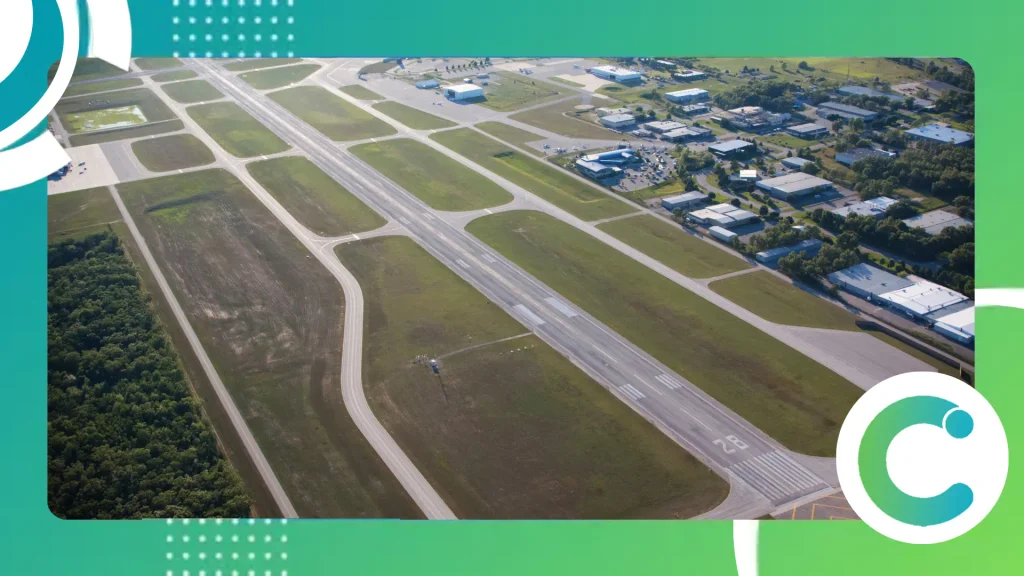
THE The impact of airports on regional development. This directly reflects the emergence of logistics parks and industrial parks around the runways.
Global investors are seeking regions capable of integrating air, road, and rail transport modes.
According to data from Ministry of Public Prosecutions and Services of Brazil, The modernization of air concessions has increased the operational efficiency of cargo transportation in the country. This has strengthened the competitiveness of regional exports.
What role do terminals play in strengthening tourism and business?
International and corporate tourism depend directly on an efficient and punctual air network.
Well-structured regional airports reduce dependence on large capital cities, enabling direct flights to continuously expanding tourist destinations.
Visitors arriving by air have a higher average spending per person and stay longer in the cities. This injects new capital into the hotel industry, local restaurants, corporate events, and urban transportation services.
Medium-sized cities that have received recent airport investments have seen a profound transformation in the service sector.
++ The impact of public utility rates on the cost of living.
International conventions and trade fairs have begun choosing these hubs due to the ease of logistics.
Comparative analysis of regional economic impact
To visually understand this progress, the table below presents consolidated data on how the presence of a modernized terminal alters the economic indicators of inland municipalities over time.
| Economic Indicator | Without Structured Terminal | With a Modernized Airport |
| Attracting Businesses | Low retention rates in industries. | High concentration of hubs |
| Real Estate Appreciation | Growth in line with the average | Appreciation up to 40% superior |
| Collection of ISS/ICMS | Limited tax base | Constant revenue growth |
| Job Profile | Predominance of low qualifications | Increase in technical job openings |
Based on this data, it becomes clear that the The impact of airports on regional development. It acts as a watershed moment.
Read more: Why do some products never return to their previous price?
Air transport increases the overall productivity of cities served by regular commercial flights.
Why should inland cities invest in regional aviation?
Geographic isolation represents a major obstacle to the growth of emerging cities.
Without quick access to major urban centers, the municipality loses competitiveness in attracting investments and retaining qualified talent.
Regional aviation shortens continental distances and enables the transport of emergencies, medical assistance, and essential supplies.
This critical infrastructure ensures economic resilience in the face of potential crises or natural disasters on the roads.
Decentralizing air transport alleviates the bottleneck caused by large metropolitan hubs.
Find out more: The subscription was cancelled, but the card is still being charged.”
By decentralizing traffic, the country gains logistical efficiency, reduces unnecessary emissions, and distributes wealth equitably among the states.
How do agribusiness and industry benefit from air infrastructure?
The modern agricultural sector uses air freight to export high-value perishable products, such as fresh fruits, flowers, and premium meats. The speed of delivery preserves market value and meets global standards.
In the heavy and pharmaceutical industries, the rapid arrival of spare parts prevents unscheduled production line shutdowns.
An efficient terminal located near the factory reduces operational losses and ensures business continuity.
In this way, the The impact of airports on regional development. It consolidates integrated productive ecosystems.
Adequate infrastructure transforms local comparative advantages into genuine global competitive advantages for companies located there.
What are the main challenges for the expansion of regional airports?
Despite the obvious benefits, the expansion of the regional air network faces regulatory bottlenecks, high operating costs, and intensive capital requirements.
Financing runway and lighting projects requires structured public-private partnerships.
The financial sustainability of smaller terminals depends on guaranteeing a constant demand for flights.
Airlines rigorously assess aircraft occupancy rates before establishing new permanent commercial routes.
Public managers need to align urban planning with the areas surrounding airports to prevent illegal settlements.
Proper zoning protects operations from excessive noise and ensures space for future runway expansions.

The future of air travel and its impact on medium-sized cities.
Technological advancements are bringing new perspectives to regional infrastructure with the emergence of electric vertical takeoff and landing (eVTOL) vehicles.
Terminals adapted for these new technologies will lead the next revolution in mobility.
Small and medium-sized airports will function as strategic vertiports, connecting rural and urban areas with unprecedented speed.
This transformation will further reduce dependence on large urban centers and decentralize national production.
The integration of clean energy, artificial intelligence in traffic management, and physical infrastructure will consolidate these spaces.
THE The impact of airports on regional development. It will continue to grow exponentially over the next few decades.
Analyzing the current scenario, it becomes clear that investing in airport infrastructure is a direct commitment to social progress.
Cities connected to the sky prosper faster and offer a better quality of life to their citizens.
To deepen your knowledge of infrastructure guidelines and civil aviation regulations, consult the documentation of... National Civil Aviation Agency (ANAC), the authority responsible for technical regulation in the country.
Frequently Asked Questions
What is the main economic impact of an airport in an inland location?
The main effect is the attraction of new investments and companies that need fast transportation. In addition, the terminal boosts local commerce, generates jobs, and increases municipal tax revenue.
How does a regional airport influence the local real estate market?
The presence of the terminal increases the value of surrounding industrial and residential land due to improved urban infrastructure.
The region gains new access roads, lighting, security, and diverse commercial services.
Do small airports also generate development for the city?
Yes, even small airports focused on executive aviation and air taxi services attract entrepreneurs and investors.
They enable quick business transactions, the transport of urgent cargo, and respond to medical emergencies for the population.
How does private concession affect regional airports?
Granting concessions to the private sector accelerates investments in modernization, expands passenger terminals, and improves operational safety.
This attracts more airlines, reduces costs, and improves the passenger experience.
++ Importance of the airport for the region
++ Regional airports are gaining strategic importance for agribusiness.
