
Advertisements
Split the electricity bill with your roommate It may seem like a trivial task, but in practice it often turns into a minefield of misunderstandings and arguments.
After all, who has never found themselves questioning whether the air conditioning left on all night or the lights left on in the hallway justify an unequal division?
To avoid arguments and maintain harmony in the apartment, it is essential to adopt clear, fair, and communicative strategies.
In this article, we'll explore smart approaches to splitting your electricity bill.
In this sense, with practical examples, relevant statistics, a creative analogy and answers to the most common questions!
Advertisements
Why Splitting Your Electricity Bill Can Be a Challenge?
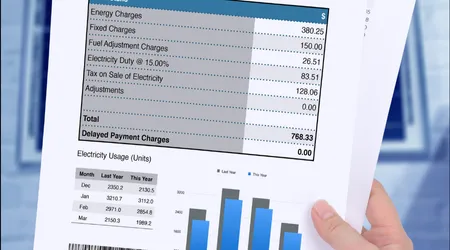
First, it's important to understand that splitting your electricity bill with your roommate isn't just a matter of math.
It involves interpersonal dynamics, different habits and, often, different perceptions of what is “fair”.
Read also: Generation Z and Money: What Are Younger People Doing Differently?
For example, if one colleague works from home and uses more electricity during the day, while the other only comes in at night, the equal division can generate resentment.
Therefore, understanding each person’s consumption patterns is the first step to avoiding conflicts.
Furthermore, lack of clear communication is one of the biggest villains.
People often assume that the other person understands how the bill will be divided, but without an explicit agreement, misunderstandings arise.
Imagine two colleagues who have never talked about their use of appliances: one of them might think that leaving the charger plugged in consumes “almost nothing,” while the other sees it as a waste.
Therefore, establishing rules from the beginning is crucial to avoid tensions.
Finally, external factors, such as increases in energy tariffs, also complicate the division.
According to a survey by Aneel (National Electric Energy Agency), in 2024, the average adjustment in electricity bills in Brazil was 8.3%, which puts even more pressure on household budgets.
Given this, how can we ensure that the bill is divided fairly without turning the apartment into an argument?
The answer lies in practical and transparent strategies, as we will see below.
Smart Strategies for Splitting Your Electricity Bill
Prior Agreement: The Foundation of Coexistence
First of all, sitting down with your roommate and defining a clear agreement is essential.
This may include deciding whether the division will be equal or proportional to usage.
For example, if one of the residents uses the bedroom as an office and consumes more energy with the computer and air conditioning, proposing a proportional division may be fairer.
Therefore, creating an “informal contract” with clear rules avoids surprises at the end of the month.
Additionally, digital tools can help.
Apps like Splitwise allow you to track shared expenses, including electricity bills, and automatically calculate each person's share.
++ Tips for Dealing with Tenants and Rental Agreements
In this way, technology simplifies the process and reduces the chance of manual errors.
However, the most important thing is to keep the dialogue open: reviewing the agreement periodically ensures that it remains fair, especially if consumer habits change.
Example 1: Mariana and Lucas' Apartment Agreement
Mariana and Lucas, roommates, decided to split the electricity bill based on usage.
Mariana, who works from home, uses the air conditioning for 8 hours a day, while Lucas, who spends the day outside, only uses it at night.
They calculated that the air conditioning represents 40% of the total consumption and divided the bill proportionally: Mariana pays 60% and Lucas, 40%.
++ How to Make Large Purchases in Cash and Avoid Installments on Your Card
To ensure transparency, they use an app to record the amounts and review the agreement every three months.
Consumption Monitoring: Knowledge is Power
Another strategy is to monitor energy consumption.
Many energy companies offer detailed reports on their website or app, showing peak usage.
This makes it possible to identify whether, for example, the electric shower or washing machine is inflating the bill.
This way, colleagues can discuss adjustments to their habits, such as reducing shower time or using appliances during off-peak hours.
Additionally, investing in an individual energy meter for specific appliances, such as air conditioning, can be a solution.
These devices, available for around R$ 50 to R$ 100, show exactly how much each device consumes.
This way, if a colleague uses a specific device more, he can bear the proportional difference.
However, it is essential that both parties agree on the use of these tools to avoid mistrust.
Finally, an analogy: splitting the electricity bill is like managing a football team.
Each player (or resident) has a role, but success depends on coordination and collective strategy.
If a teammate “plays alone” and ignores the other’s habits, the team (or the relationship) goes downhill.
So, align the moves, or rather, the kWh – for a harmonious game.
Creative Division: Out-of-the-Box Solutions
On the other hand, there are those who prefer more creative approaches.
One idea is to create a monthly “energy fund,” where each colleague contributes a fixed amount, and the excess bill is discussed separately.
This encourages conscious use, as everyone wants to avoid paying more.
Additionally, this approach reduces friction as the base value is already agreed upon.
Another tactic is to gamify energy saving.
For example, colleagues can set a challenge: whoever reduces their consumption the most in a month wins a “prize,” such as not washing the dishes for a week.
This strategy not only makes the division lighter, but also promotes sustainable habits.
However, it is necessary to ensure that the game is fair and that both parties are able to participate.
Example 2: Ana and Pedro's Economics Challenge
Ana and Pedro, who share an apartment, created a monthly challenge: whoever managed to reduce their energy consumption by 10% compared to the previous month would be exempt from washing dishes for a week.
They installed an energy meter and shared tips such as using LED lights and turning off appliances on standby.
In the end, both reduced their consumption, and the bill fell by 15%, proving that gamification can be fun and economical.
| Strategy | Description | Advantages | Challenges |
|---|---|---|---|
| Prior Agreement | Define clear rules for division (equal or proportional). | Avoids misunderstandings and promotes transparency. | It requires initial dialogue and periodic reviews. |
| Monitoring | Use utility reports or meters to track consumption. | Identifies bottlenecks and supports fair decisions. | May require investment in tools. |
| Energy Fund | Fixed monthly contribution, with negotiated surplus. | Reduces friction and encourages savings. | It requires mutual trust to work. |
| Gamification | Create challenges to reduce consumption. | Makes the process fun and sustainable. | It may not work if a colleague doesn't join in. |
How to Avoid Conflicts When Splitting Bills
First of all, transparency is the key to avoiding fights.
Sharing the digital or physical invoice with a colleague, showing the consumption details, eliminates suspicion of manipulation.
Furthermore, openly discussing each other's habits, such as appliance usage or peak consumption times, helps build empathy.
For example, if a colleague takes long showers with an electric shower, a friendly conversation can lead to adjustments without hard feelings.
Furthermore, it is essential to avoid accusations.
Instead of saying, “You always leave the light on,” try, “I noticed the hallway light is on sometimes; can we get into the habit of checking it?”
This constructive approach keeps the tone friendly and focuses on the solution, not the problem.
This way, coexistence remains harmonious, and the electricity bill does not become a trigger for arguments.
Finally, revisiting the agreement regularly is a smart practice.
Routines change with a new job, a night course, or even the purchase of a new appliance, and the agreement needs to reflect these changes.
So, schedule a conversation every three to six months to assess whether the split still makes sense.
After all, why make your electricity bill a villain when it can just be another bill in your apartment?
Frequently Asked Questions About Sharing Your Electricity Bill with Your Roommate
| Question | Response |
|---|---|
| How do I split the bill if a colleague uses more energy? | Calculate the proportion of consumption (e.g., air conditioning) based on meters or utility reports. A proportional agreement is fairer. |
| What if we can't reach an agreement? | Consider a neutral mediator, such as a mutual friend, or use apps like Splitwise to automatically calculate. |
| Is it worth investing in energy meters? | Yes, meters (R$ 50–100) help to identify the exact consumption of each appliance, facilitating proportional divisions. |
| How to deal with energy tariff increases? | Reevaluate the agreement with each increase (average of 8.3% in 2024, according to Aneel) and discuss adjustments to consumption habits. |
| What if a colleague refuses to pay his share? | Establish a fixed "energy fund" and negotiate the surplus. If it persists, consider stricter rules or changing roommates. |
Conclusion: Split the electricity bill with your roommate
Splitting the electricity bill with your roommate without fighting requires planning, communication, and creativity.
Whether through clear agreements, consumption monitoring, or innovative solutions like gamification, it's possible to transform a potential source of conflict into an opportunity for collaboration.
After all, who doesn't want an apartment where living together is as easy as the electricity bill?
With the right strategies, you and your colleague can maintain harmony and still save money.
So, how about sitting down today to align the rules and ensure a tension-free home?
