
Advertisements
EU-Mercosur Agreement!
Imagine a world where European products reach Brazilian shelves at more affordable prices, while domestic exports gain momentum.
THE EU-Mercosur agreementThe recently signed agreement promises exactly that, but with nuances that directly impact the daily financial lives of families.
Let's explore how this partnership can impact your budget.
Keep reading!
Advertisements
What is the EU-Mercosur Agreement?
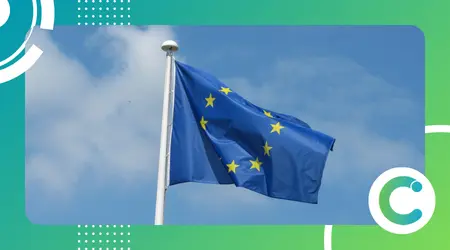
The EU-Mercosur agreement represents a historic trade treaty between the European Union and the South American bloc formed by Brazil, Argentina, Paraguay, and Uruguay.
Signed on January 17, 2026, after 26 years of negotiations, it aims to eliminate tariff barriers and facilitate the flow of goods, services, and investments.
Read also: Loan Simulation: Is it Deceiving? Understand Why the Final Amount Is Rarely the Same
Furthermore, this pact creates one of the world's largest free trade zones, integrating approximately 720 million people and a combined GDP of US$22 trillion.
For Brazil, the main economy of Mercosur, this means opening doors to European markets that are more demanding in terms of environmental and quality standards.
Therefore, it's not just about trade; it involves commitments to sustainability, labor rights, and intellectual property protection.
Thus, the agreement positions Brazil as a global player, but requires internal adjustments to maximize benefits.
++ Knowledge-Based Extra Income: The Fastest Growing Services
However, its implementation depends on ratifications in the European Parliament and the parliaments of the Mercosur countries, which could take months or years.
Meanwhile, analysts are already projecting gradual changes in the economic landscape.
How does the EU-Mercosur Agreement work?
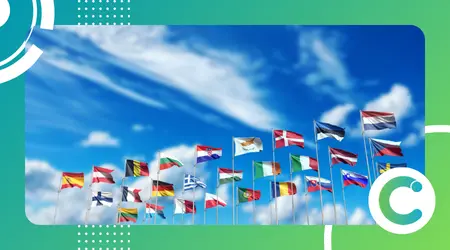
The EU-Mercosur agreement operates through progressive tariff reductions, where import and export taxes are eliminated over periods ranging from immediate to 15 years.
++ 7 Silent Mistakes That Break Small Businesses Even with Good Sales
For Brazilian products, more than 5,000 items will have zero tariffs in Europe as soon as it comes into effect.
Furthermore, the mechanism includes quotas for sensitive sectors, such as agriculture, protecting local producers from sudden floods of goods.
For example, Brazilian meat and ethanol gain easier access, but with initial limits to avoid imbalances.
Therefore, the plan prioritizes a smooth transition: Brazil has up to 15 years to reduce tariffs on 44% of European products, allowing domestic industries to prepare for the competition.
However, rules of origin ensure that only goods genuinely produced within the blocs benefit, preventing trade triangulation.
Thus, the agreement fosters partnerships, such as joint ventures in technology and innovation.
Furthermore, chapters on services and investments open avenues for Brazilian companies to operate in the EU, and vice versa, boosting bilateral financial flows.
What are the financial impacts on Brazilians?
The impact on Brazilians' wallets stems mainly from the reduction in prices of imported products, such as European wines, cheeses, and olive oils, whose current tariffs of up to 35% will be gradually reduced to zero.
This could make luxury items more accessible to middle classes.
Furthermore, imported medicines and machinery become cheaper, affecting healthcare and industrial production costs, which indirectly lowers the prices of domestic goods.
For example, cheaper inputs for factories can reduce the final cost of household appliances.
Therefore, families may notice savings in supermarkets, but also pressures in local sectors, such as dairy, where European competition demands efficiency to maintain competitive prices.
However, the impact is not immediate; experts predict noticeable effects starting in late 2026, with clear changes in 2027 due to ratification and implementation.
Furthermore, the agreement could raise wages in export sectors, such as agribusiness, injecting more income into regional economies and stimulating consumption.
| Impact | Description | Effect on your wallet. |
|---|---|---|
| Reduction of Tariffs on Imports | Gradual elimination of taxes on wines and cheeses. | Saving money on everyday purchases. |
| Lowering Input Costs | More affordable machines and medicines | Lower costs in healthcare and durable goods. |
| Competition in Local Sectors | Pressure on national industries | Possible adjustments to the prices of Brazilian products. |
Why does the EU-Mercosur agreement benefit the Brazilian economy?
The EU-Mercosur agreement benefits the Brazilian economy by expanding access to 36% of world trade, jumping from the current 8%, which boosts exports and attracts investment.
This strengthens sectors such as agriculture and manufacturing.
Furthermore, integration promotes industrial modernization, forcing companies to adopt European technologies, increasing productivity and global competitiveness.
For example, the Brazilian steel industry could gain market share in the EU.
Therefore, benefits extend to skilled jobs, with investment growth projections of 1.49% by 2040, according to studies.
However, the pact reinforces environmental commitments, aligning Brazil with sustainable standards that attract more green capital.
Furthermore, it diversifies trading partners, reducing dependence on volatile markets such as China, and stabilizing external revenues.
Have you ever stopped to think how a cheaper French wine could make your family meals more special, without breaking the bank?
What challenges does the EU-Mercosur agreement present for consumers?
The challenges include increased competition for domestic industries, potentially raising unemployment in less prepared sectors, such as automotive, and affecting family incomes.
Furthermore, Brazilian products may face non-tariff barriers in the EU, such as strict sustainability standards, increasing export costs and impacting domestic prices.
Therefore, lower-income consumers may not feel immediate benefits, since initial reductions favor premium items, requiring redistributive policies for equity.
However, exchange rate fluctuations can negate tariff gains, keeping prices high if the real depreciates.
Furthermore, regulatory adjustments require government investment, possibly including increased indirect taxes in the short term.
| Challenge | Explanation | Potential Impact |
|---|---|---|
| Increased Competition | Entry of cheap European products | Pressure on local jobs |
| Non-Tariff Barriers | Strict environmental standards | Closing down inefficient exports |
| Initial Inequality | Benefits for upper classes first | Economic delay for all |
What examples show the practical effect of the EU-Mercosur agreement?
A prime example is a family from São Paulo that loves Italian cuisine.
With the agreement, imported olive oils and Parmesan cheeses will fall in price by up to 20% over five years, allowing them to incorporate more of these items into their weekly diet without exceeding their monthly grocery budget of R$ 800.
Furthermore, this encourages families to try new recipes, improving their quality of life, but it requires local cheese producers to invest in quality in order to compete.
Therefore, the example illustrates how the agreement transforms consumption habits, making luxuries accessible.
Another creative example involves a small electronics entrepreneur in Rio Grande do Sul.
He imports German components for assembling devices; with tariffs reduced to zero over 10 years, his costs will fall by 15%, allowing him to lower selling prices and expand his business, generating local jobs.
However, he must train his team to European standards, thus avoiding market loss.
Furthermore, this demonstrates how the agreement fosters innovation, positively impacting people's finances through extra income.
What statistics reveal the potential of the EU-Mercosur agreement?
Statistics indicate that the agreement could increase Brazil's GDP by 0.46% (US$$ 9.3 billion) by 2040, according to Ipea, highlighting direct economic gains.
Furthermore, exports and imports each grew by 3%, balancing the trade balance.
Therefore, investments in the country increased by 1.5%, boosting various sectors.
However, Mercosur as a bloc gains 0.2% in GDP, while the EU only gains 0.06%, showing an asymmetry favorable to the South.
Furthermore, over 5,000 Brazilian products will have zero tariffs in Europe immediately, expanding markets.
| Statistic | Source | Implication |
|---|---|---|
| 0.46% GDP Growth | Ipea | US$ 9.3 billion by 2040 |
| 3% increase in exports | Ipea | Improvement in the trade balance |
| Access to 36% of World Trade | CNI | From 8% to 36% global |
Why Compare the EU-Mercosur Agreement to a Trade Bridge? An Analogy
Imagine the EU-Mercosur agreement as a robust bridge linking two continents separated by an ocean of tariffs and red tape.
Just as a bridge facilitates the traffic of vehicles, the pact streamlines the flow of goods, connecting Brazilian producers to European consumers.
Furthermore, heavy vehicles (agricultural exports) cross at higher speeds, but bridges require maintenance – in this case, environmental adaptations to support the traffic.
Therefore, pedestrians (ordinary consumers) benefit from shorter routes, paying less for goods that previously required expensive journeys.
However, storms (economic crises) test the structure, requiring reinforcements such as industrial policies.
Furthermore, the bridge is not one-way; it allows for both directions, enriching both sides with diversity.
EU-Mercosur Agreement: Frequently Asked Questions
| Question | Response |
|---|---|
| When does the EU-Mercosur agreement come into effect? | After ratification, initial effects at the end of 2026, according to G1. |
| Which products are getting cheaper? | European wines, cheeses and medicines, with gradual reductions. |
| Does the agreement affect jobs in Brazil? | Yes, it can create exports, but it can also challenge local industries, such as in CNN Brazil. |
| Are there environmental risks? | Yes, but it includes sustainability clauses to mitigate those risks. |
| How does the agreement impact small businesses? | It offers export opportunities, but requires adaptations, detailed in... BBC. |
