
Advertisements
THE digital account with automatic Pix It didn't arrive as just another cute feature in apps.
She arrived to dismantle, slowly but surely, that irritating routine of remembering due dates, opening payment slips, copying codes, or hoping that the automatic debit from the old bank wouldn't get blocked because the company doesn't have an agreement with her institution.
Launched by the Central Bank in June 2025 and made mandatory in stages throughout the year, the mechanism is already circulating in 2026 as a real alternative to the old direct debit — and, in some cases, even to credit cards for those who don't have one or don't want to use one.
Continue reading the text!
What exactly is a digital account with automatic Pix?
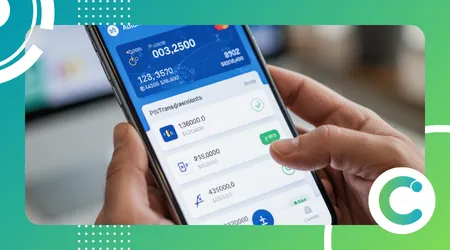
Digital accounts have existed for years, but they always carried a somewhat incomplete promise.
Advertisements
In that sense, fast transfers, yes, often with zero fees, but when it came to recurring payments, we were back in the last century — bank slips, limited agreements, fines for forgetting.
THE digital account with automatic Pix This changes because it incorporates a new layer built directly into the Pix infrastructure.
The user authorizes only once — via the app, using biometrics — and sets clear rules: maximum amount per charge, whether to allow use of credit limit if the balance reaches zero, and which days or conditions apply.
After that, the company (electricity, school, streaming service, gym) automatically charges on the agreed date, and the money is released without needing another click.
Unlike traditional direct debit, which depended on bilateral agreements between banks and companies, Pix Automático uses the Central Bank's open network.
Any eligible provider can charge any authorized payer, regardless of the bank.
There's something unsettling about this: control is shifting a little more towards the consumer. Previously, canceling an automatic debit might require a phone call, a protocol number, and waiting.
Now, in the app of digital account with automatic PixYou can pause or cancel in seconds — and the company receives instant notification.
This reduces friction, but it also requires more discipline: those who authorize without reading the terms may end up surprised by variations in the value of bills such as energy or condominium fees.
See also: How does automatic Pix change the way we pay our monthly bills?
How does automatic Pix work within digital accounts?
The flow is direct, almost invisible after the initial setup.
The company generates an authorization request (often via QR code, link, or within the bank's own app).
You open it, read what's being asked — monthly recurrence, approximate value, due date — and approve it by setting safeguards.
The Central Bank's system records everything in an encrypted and traceable way.
In the days leading up to the due date, the company sends the actual invoice to your digital bank. The app schedules the payment and notifies you in advance.
If everything is correct (balance or limit is okay), the Pix payment will be processed automatically.
If there's not enough money, the payment will fail without an automatic penalty — you'll receive an alert and have time to adjust.
This contrasts with payment slips, which quickly accrue interest, or old debts that could go into overdraft without clear prior notice.
Banks like Nubank, Inter, and PicPay will fully integrate this by 2026, even allowing the migration of old debts.
Integration via the Central Bank's APIs ensures that it works between different institutions, something that conventional debit has never been able to achieve universally.
The result? Fewer apps opened, fewer passwords typed, fewer costly forgotten passwords.
++ New credit rules that influence lending today.
What advantages arise for those who pay recurring bills?
The most immediate benefit is time — time that was previously wasted manually confirming payments or chasing after duplicate copies.
With the digital account with automatic PixRecurring bills cease to be a constant source of anxiety. Notifications arrive in advance, you check if the amount is correct, and that's it.
Financially, the impact is twofold. Without invoice issuance fees (which could reach R$ 3–5 per invoice) and without penalties for unintentional delays, the monthly cost drops.
For those who live on the edge, avoiding a fine of R$ 10 here and there adds up over the year.
++ How to earn extra money with AI by creating services for businesses.
Furthermore, predictability improves: you know exactly when the money will be released, making it easier to create a realistic budget.
On the other hand, companies are seeing default rates plummet because payments are flowing smoothly.
Less active debt collection means lower debt recovery costs.
For the consumer, a subtle freedom emerges: changing service providers doesn't mean renegotiating a bank agreement.
Simply cancel the authorization in the app and authorize the new one. Have you ever stopped to think how much simpler this makes switching gyms, health plans, or streaming services without any hassle?
| Aspect | Traditional Model (Old Payment Slip / Debit) | Digital Account with Automatic Pix Payment |
|---|---|---|
| Monthly management time | Top: check due dates, generate payment slip, pay manually | Minimum: one-time authorization + proactive notifications |
| Extra costs | Payment slip fees + frequent fines | Generally zero for individuals; no automatic fines for failure. |
| User control | Limited; slow cancellation. | Total: pause/cancel in seconds in the app. |
| Reach | Restricted to existing agreements | Open to: any company that adheres to Pix Automático. |
Real-life examples of how this changes routines.
Ana owns a small craft shop in Sorocaba.
Every month, the rent for the commercial space was paid via bank slip — she would print it out, go to the bank, or pay through the app, always running the risk of forgetting it in the middle of production.
With the digital account with automatic Pix At Nubank, she authorized it once, set a limit of R$ 1,800, and now the payment goes through automatically on the 5th. What changed?
She gained hours each month to focus on inventory and customers, instead of administrative finances.
Pedro, a family man with a busy schedule, uses Inter to pay his children's school fees.
Before, I relied on reminders on my phone and manual payments — or hoped my credit card wouldn't be maxed out.
In the second example, he set up automatic Pix with a limit of R$ 950 per child and the option to use the limit if necessary.
The app notifies you two days in advance; if everything is okay, the money is released. Result: zero late payments last semester, without having to interrupt meetings to "pay for school now".
These cases illustrate something bigger. For freelancers, it prevents the interruption of essential services; for families, it preserves peace of mind amidst the daily chaos.
THE digital account with automatic Pix It doesn't solve everything, but it takes a recurring weight off the shoulders of those who already carry a lot.
What is the concrete impact on the Brazilian payments market?
Pix was already huge — in 2025 it moved R$35.36 trillion, with 79.8 billion transactions, a growth of 33.61% over 2024, according to the Central Bank.
Automated payments enter this story as a catalyst for recurring revenue, a segment that previously depended on (expensive) bank slips or limited debit options.
Inclusion is advancing: those without a credit card or traditional bank account can now access subscriptions and services via simple authorization in the app.
Companies reduce operational costs and default rates, improving cash flow in an unstable economy.
An analogy that makes sense: it's like transforming the recurring payment of a manual car, full of gears and a clutch, into an automatic with a cruise control system — you set the route once, adjust the speed if needed, but the system takes care of the rest while you watch the road.
In 2026, with mandatory interbank transfers consolidated, Pix Automático puts pressure on competition: traditional banks lose exclusivity, digital banks gain traction.
The result is a more fluid ecosystem, less paperwork, and fewer hidden costs.
Why is it worthwhile to switch to a digital account with automatic Pix right now?
With inflation still impacting budgets, every real saved counts. Avoiding fines for unintentional late payments justifies the change.
But it goes further: the digital account with automatic Pix It delivers integrated reports that show where the money is really going, helping to identify silent leaks.
Technology never stops. Apps receive constant updates — AI-powered billing predictions, automatic limit adjustments.
Those who postpone migration lose these layers of intelligence.
And with the Central Bank guaranteeing traceability and security (one-time authorizations, instant cancellation), the risk is low compared to the gain in autonomy.
Ultimately, adopting now is choosing to breathe easier.
Finances cease to be a daily task and become a backdrop—reliable, discreet, almost invisible. This frees up your mind for what really matters.
Frequently asked questions about digital accounts with automatic Pix.
| Question | Response |
|---|---|
| Is it safe to authorize in digital account with automatic Pix? | Yes — Central Bank encryption, single authorization, immediate cancellation in the app, full tracking. |
| Is it possible to set a limit on the amount? | Yes, you set the limit per charge and allow the use of credit in case of insufficient funds. |
| Which digital accounts already offer this? | Nubank, Inter, PicPay, and other major players have been integrated since 2025/2026. |
| What if there's not enough money on the due date? | Payment is suspended, you receive an immediate alert — no automatic penalty, giving you time to correct it. |
| Can I transfer old debts? | Many apps allow you to import existing authorizations into the new Pix Automático system. |
| Is there a cost for individuals? | Generally not; for businesses, there may be a contractual fee depending on the institution. |
This tool is not just about convenience. It's a small shift in power: from the system to the user. And, in Brazil in 2026, that already makes a real difference.
Updated sources:
- Central Bank – Automatic Pix
- G1 – PIX moves R$ 35.4 trillion in 2025
- E-Investor – Pix in 2026: new features
