

Advertisements
Understand the Behaviors that make your digital bank see you as a risk. This is crucial to avoid sudden account blocks on a daily basis.
When intelligent systems detect unusual activity, automatic locks are immediately triggered to mitigate financial losses and prevent serious fraud.
To help with your daily navigation, we've divided this practical and informative guide into the following essential points about financial security and smart banking monitoring:
- The detailed workings of bank protection algorithms.
- The five behaviors that trigger suspicious alerts.
- The real difference between preventative lockdowns and permanent closures.
- Prevention tips to keep your balance always available.

What is risk analysis in digital banks?
Risk analysis is a dynamic set of automated processes designed to identify suspicious activity and protect the financial ecosystem against cybercrime.
Financial institutions use advanced artificial intelligence to assess the likelihood of a transaction being fraudulent in milliseconds, by analyzing history and context.
This ongoing verification ensures that your account remains protected even in unusual situations.
However, when the account holder themselves adopts behaviors outside the norm, the defense systems trigger strict alerts.
How does real-time transaction monitoring work?
Transactional monitoring works by continuously evaluating specific variables, such as geolocation, time of transactions, amounts transacted, and the usual profile of the account holder.
The technology learns the customer's routine to differentiate legitimate transactions from attempted intrusions or scams perpetrated by third parties.
According to the safety guidelines of Central Bank of BrazilTherefore, fintech companies must implement rigorous mechanisms to combat money laundering and illicit financing.
Therefore, the automation continuously monitors every transfer received or sent.
5 Behaviors That Triggers Red Alerts in Fintechs
Understanding which actions trigger alarms in the algorithms helps avoid unnecessary disruptions and operational freezes in your financial application.
++ MED 2.0 in the digital account: how to dispute Pix with a better chance
Below, we highlight the most common scenarios identified in the monitoring routines of leading fintech companies.
1. Unusual movements and sudden volume spikes
Receiving amounts significantly higher than the income declared in the initial registration represents one of the main Behaviors that make your digital bank see you as a risk..
If your account typically handles one thousand reais per month and suddenly receives fifty thousand reais via Pix, the system will proactively block the balance to verify its origin.
This discrepancy requires the institution to request proof of income or invoices to release the withheld amount.
Without proper documentation, the transaction will be frozen indefinitely.
2. Lending the account or conducting transactions for third parties.
Lending your Pix key or allowing others to use your bank account to receive third-party payments raises serious suspicions of asset concealment.
The algorithms quickly detect connections to suspicious accounts, which may classify your profile as an unwitting participant in pyramid schemes or electronic fraud.
Read more: Is a digital account with automatic returns worth it today?
Even if the intention is only to help a friend, the system sees the operation as illegal triangulation. Legal responsibility for the entire transacted balance always remains with the registered account holder.
3. Simultaneous access by multiple devices or IPs
Accessing your digital account through untrusted virtual private networks or logging in on two distant mobile phones within a short interval triggers the emergency lock.
Artificial intelligence interprets this impossible geographical variation as an imminent hacker attack or credential theft, suspending functionalities for user security.
Keeping logins open on public computers or sharing passwords with family members frequently leads to geographical inconsistencies.
++ Financial habits that help improve relationships with banks.
These discrepancies highlight the cybersecurity vulnerability warnings in the customer profile.
4. Constant receipt of fractional amounts from various sources.
Receiving dozens of small-value transfers from various unknown accounts within a few minutes is seen as a classic scam pattern.
Many scammers use this method to launder illicit funds, making it one of the... Behaviors that make your digital bank see you as a risk..
Personal accounts misused for commercial sales without being properly converted to a business profile are subject to this rule.
The split volume generates automatic alerts indicating misuse of registration purpose.
5. Quickly update registration information before large withdrawals.
Changing the registered email, phone number, and main password, and then immediately attempting to transfer the entire accumulated balance, will generate a maximum alert on the platform.
This sequence of actions exactly replicates the behavior of criminals after hijacking accounts, requiring additional identity verification before transactions can be authorized.
The simultaneous change of credentials coupled with the immediate emptying of the account disrupts the operational flow. The bank requires detailed biographical or facial verification before validating the transfer of funds.
Comparative table of bank security alerts
Below, we present an informative framework detailing the alert levels of digital institutions and the most frequent operational triggers observed in the current market:
| Alert Level | Main Operational Trigger | Bank's Automatic Action |
| Low | Log in to a newly authorized device. | Push notification and SMS confirmation |
| Average | Pix transactions at night are outside the standard timeframe. | Temporarily hold the submission for 30 minutes. |
| High | Multiple incorrect password attempts | App lock and reset |
| Critical | High-value entry fee without proof of payment. | Precautionary suspension of balance for up to 72 hours. |
What is the difference between a preventative account freeze and an account closure?
Preventive blocking is a temporary protective measure that lasts a few hours or days while the institution verifies the legitimacy of the reported suspicious transaction.
During this period, the customer can submit supporting documents to restore normal access to all the features of the financial application.
Permanent closure occurs when the institution identifies a direct violation of the terms of use or finds repeated violations. Behaviors that make your digital bank see you as a risk..
In this extreme scenario, the company unilaterally terminates the contract and returns the remaining funds to another account under the same name after the stipulated regulatory deadlines.
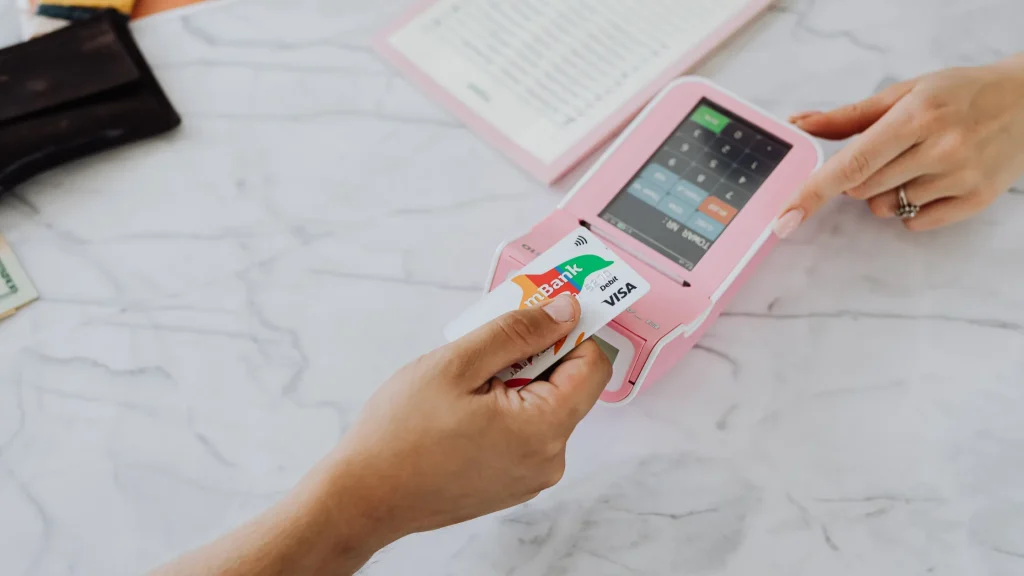
How can you maintain a good reputation and avoid behaviors that make your digital bank see you as a risk?
To build a reliable history with your digital bank, keep your registration information and proof of income always up-to-date on the mobile app platform.
Transparent registration data significantly reduces the chances of false positives during automatic scans performed by the prevention system.
Whenever you are about to make a large sale or receive an amount outside your usual pattern, notify customer support in advance to avoid automatic blocks.
This prior communication demonstrates good faith and avoids operational disruptions.
Adopting two-factor authentication and never sharing corporate or personal passwords ensures that your financial experience remains agile, secure, and completely free of surprises.
Using the platform responsibly protects your assets against unforeseen digital events.
Conclusion
Avoid the Behaviors that make your digital bank see you as a risk. It guarantees uninterrupted access to your money and preserves your financial health.
Digital banking technology has evolved to protect the consumer, making it essential to act with transparency and responsibility in all daily online transactions.
To learn more about your operational rights and banking obligations, please consult the regulations available on the official website. National Monetary CouncilAnd always stay well informed and protected.
Frequently Asked Questions
Can a digital bank block my account without prior notice?
Yes, current regulations allow for immediate precautionary blocking if the system identifies a well-founded suspicion of fraud or an imminent operational risk to the institution.
How long does a preventative freeze on received funds last?
Typically, the preventative review takes up to seventy-two business hours, during which time the institution requests proof or validates the legal origin of the money.
What should I do if my account is blocked by mistake?
Contact the app's official support team immediately, submit the requested supporting documents, and wait for the security team to review them.
Does having a negative credit history make digital banks view my account as a risk?
No, credit restrictions affect loan approvals, but they do not create operational blocks or raise suspicions of fraud in your daily balance transactions.
++ Transparency in credit: digital banks reveal their credit scores and change the rules of the game.
++ Digital scams are causing Brazilians to change their behavior.
